
 Basket (0) £0.00
Basket (0) £0.00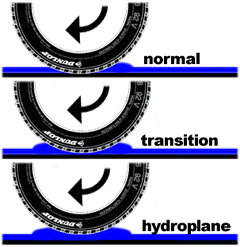 When
driving in the rain or over standing water and you temporarily feel the
vehicle is no longer in control this a result of hydroplaning or some
would also call it aquaplaning. This incident normally happens when a
layer of water builds between the tyre and road which then causes the
vehicle to swerve around like a sled.
When
driving in the rain or over standing water and you temporarily feel the
vehicle is no longer in control this a result of hydroplaning or some
would also call it aquaplaning. This incident normally happens when a
layer of water builds between the tyre and road which then causes the
vehicle to swerve around like a sled.
Hydroplaning is caused by a combination of factors which incude the speed the tyre is traveling how much tread is remaing on the tyre, tyre pressure and also the depth of the water. When the tyre travels over the water it creates a blocking point similar to a wave albiet very small this cuases the tyre to temporaly float on the water hence loosing contact with the road. This is hydroplaing, to lose in lose traction and glide or hydroplane across the water.
On wet roads when tyres if a tyre has good tread depth and the tyre pressure is correct you will avoid sliding and hydroplaning because the grip and pressure allows the tyre to cut through the water. Where there is little tread remaining or the tyres are under inflated can cause hydroplaning at very low speeds.
If the tread wear is blow the legal limit of 1.6mm, and you are driving at high speeds you will experience loss of grip due to the tyre not able to disperse water properly. This will cause major loss of traction. Loss of grip especially wet roads can be fatal and cause the vehicle to spin or slide.